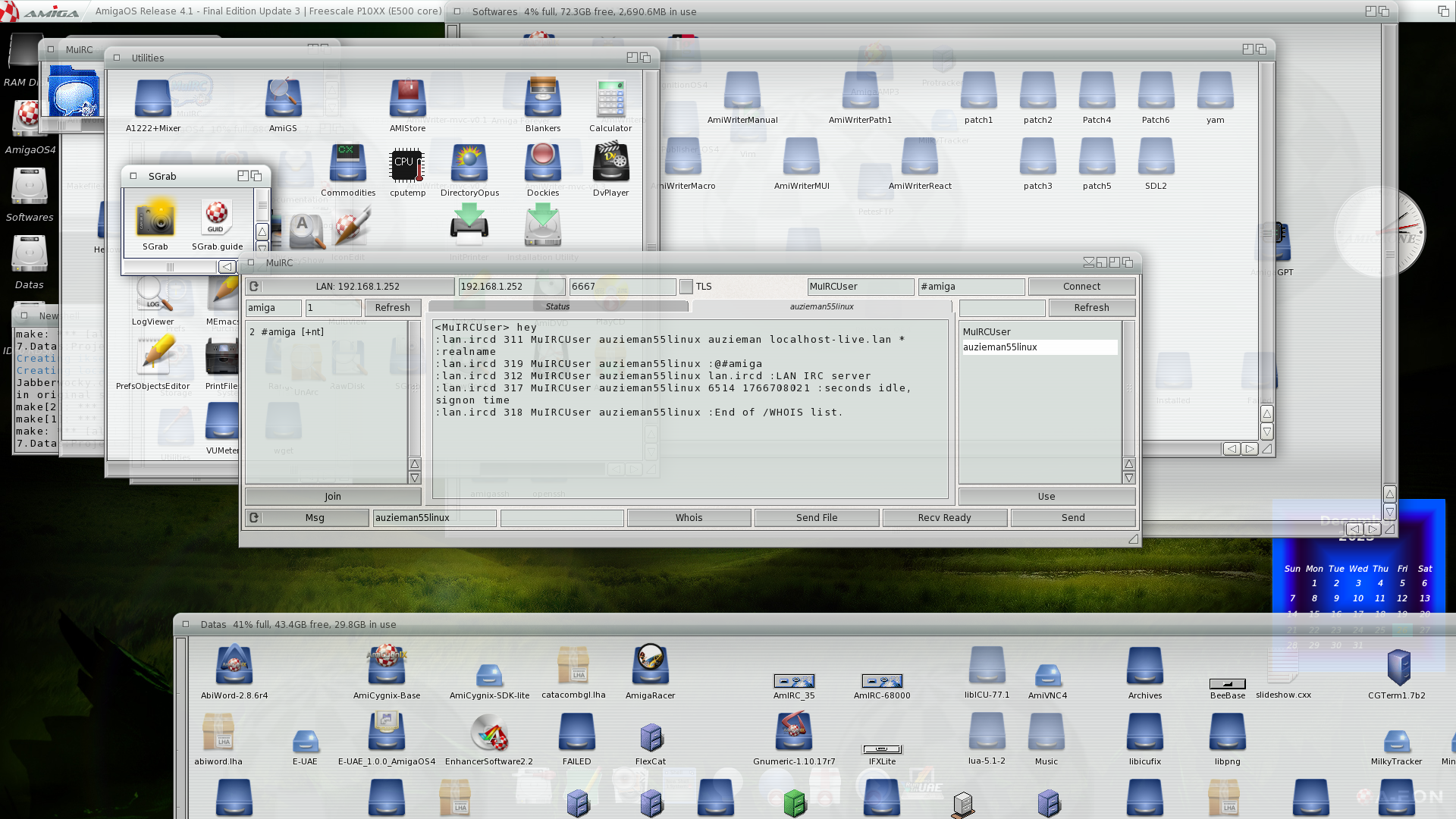
MuIRC is a small MUI-based IRC client for AmigaOS 4.1. It started as a minimal MVC tutorial and grew into a practical testbed with tabs, TLS support, DCC send/receive, room/member lists, an ident responder, and a protocol layer that could support more networks later.
Retro work has a way of forcing honesty. APIs are smaller. Toolchains are more particular. UI choices are visible. A careless assumption shows up quickly.
Why this belongs in the retro lane
Classic-platform development teaches modern engineers to pay attention to:
- event loops;
- memory and resource limits;
- packaging details;
- UI toolkit expectations;
- compatibility;
- patient testing.
Those same habits matter in modern infrastructure, even when the machines are larger and the layers are thicker.
What is working now
- MUI interface with status, room, and user tabs.
- Non-blocking connect with timeout handling.
- TLS through AmiSSL for servers that expect port
6697. /LISTroom listing and/NAMESmember list parsing.- DCC send and receive, defaulting downloads to
PROGDIR:Downloads. - Ident responder on port
113. - Basic CTCP
VERSIONresponse.
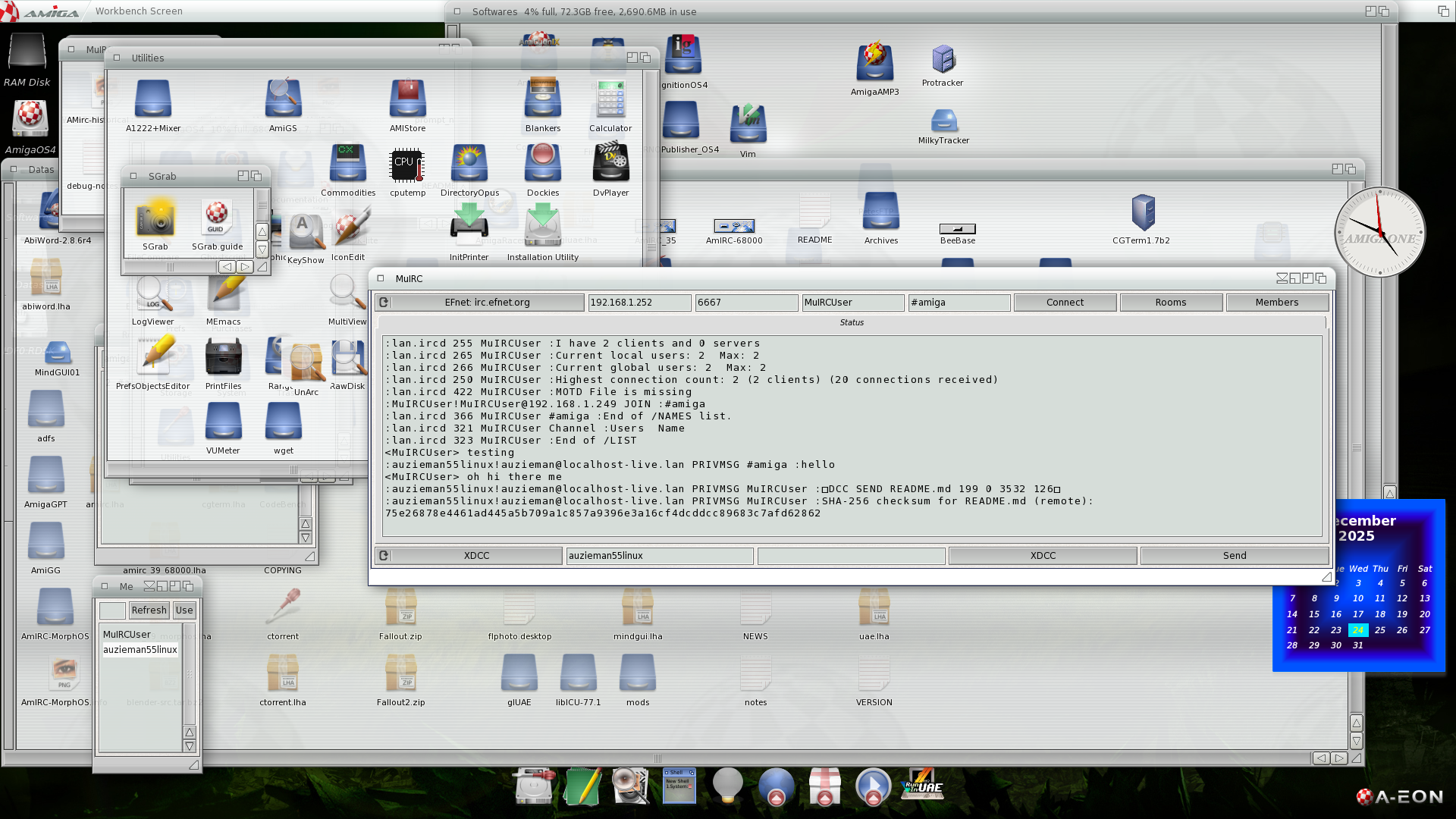
The version check screenshot is the sort of small receipt that matters in retro work. It proves the binary that was just built is the binary being exercised on the target system. On modern infrastructure that same habit becomes build IDs, container digests, pipeline run IDs, and deployment receipts.
How the UI is shaped
The UI is assembled with MUI objects: connection fields across the top, a register object for tabs, and a bottom row for message input and actions. Events route through the controller loop into the IRC plugin.
WindowContents, VGroup,
  Child, HGroup,         /* server, port, TLS, nick, channel, buttons */
  End,
  Child, RegisterObject, /* status, room, and user tabs */
  End,
  Child, HGroup,         /* input + actions */
  End,
End;
The cross-build path stays simple:
sudo docker run --rm -v /home/auzieman/Projects:/Projects \
  rolfkopman/os4env /bin/bash -lc "cd /Projects/MuIRC && make clean && make"
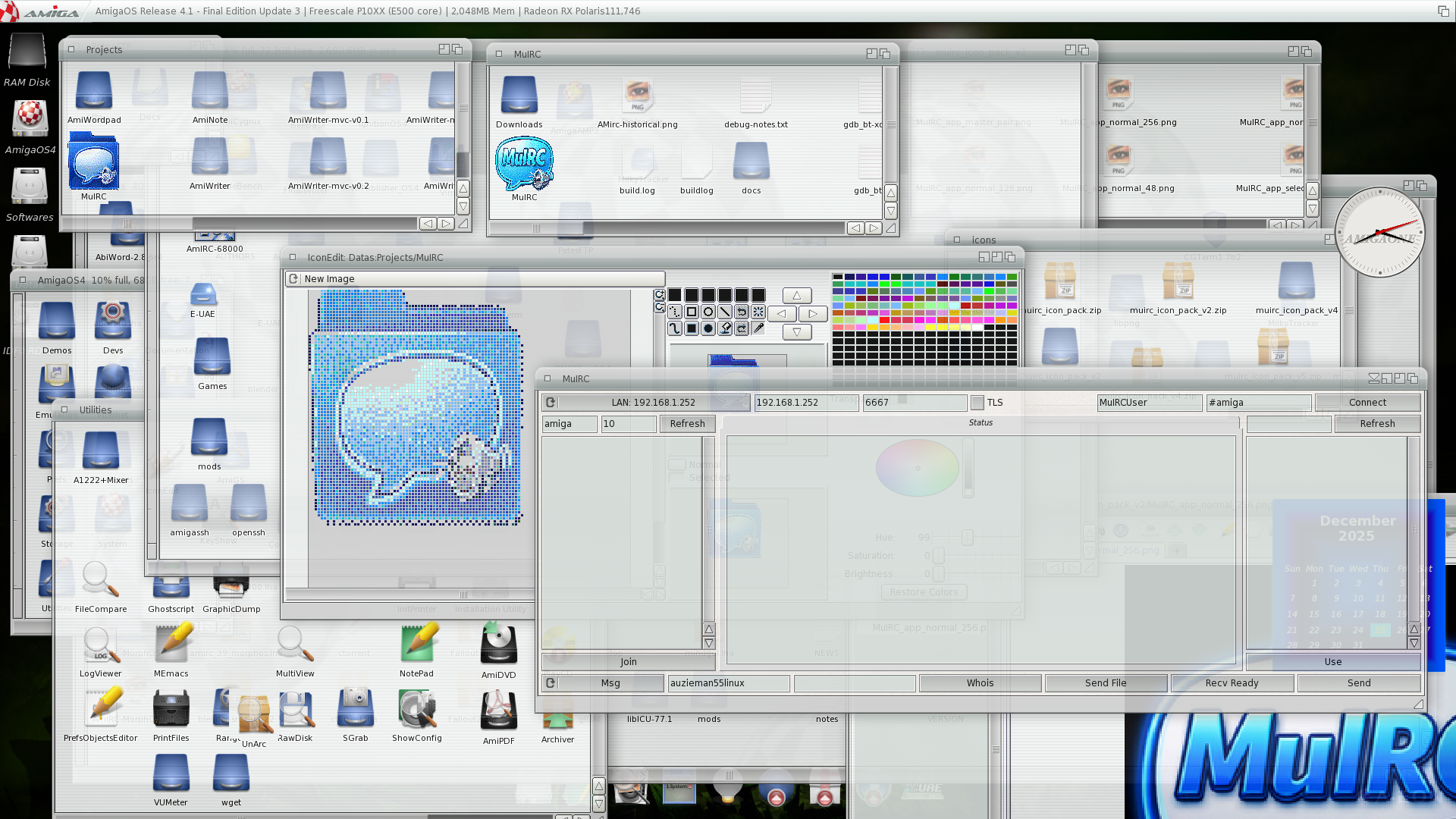
Even the icon pass belongs in the engineering story. A classic desktop tool is not only its socket code. It has to appear on the system in a way that feels native enough that a user trusts it.
Assisted development as a patient pair programmer
Codex can help draft code, explain old APIs, compare implementation paths, and turn a crash into the next focused experiment. But the human still has to test on the real target, decide what belongs in the project, and preserve the notes that future maintainers will need.
That makes MuIRC a useful Auzietek story: not “AI writes software by magic,” but “AI helps an engineer keep moving through a tricky platform with better context.”
Repo: MuIRC on GitHub.
Video lane: Auzietek retro development playlist.
Legacy source: MuIRC on Auzietek.