Retro computing is not just nostalgia with nicer lighting.
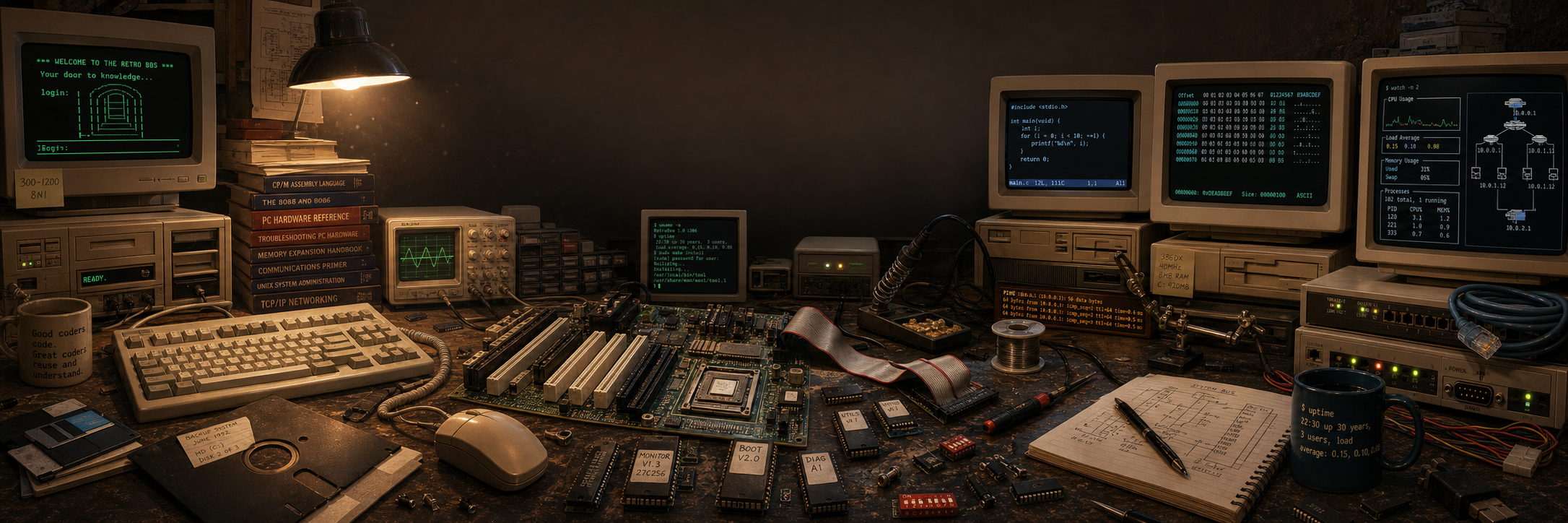
Classic systems are useful because the constraints are visible. Memory matters. Disk speed matters. Video modes matter. A bad assumption shows up quickly because there is not a giant abstraction stack hiding it.
That makes retro work surprisingly good training for modern infrastructure.
Why old systems still teach well
When you work around older machines or emulators, you learn to respect:
- limited resources;
- clear interfaces;
- boot order;
- storage layout;
- device compatibility;
- documentation that was written for humans.
Those same ideas show up in modern labs too. PXE booting a server, wiring a serial console, fixing a bootloader, or migrating a service all become easier when you think in layers.
A tasteful retro lane
The retro lane will cover Amiga-inspired workflows, classic system notes, emulation, preservation, and the occasional “how does this old idea map to a modern lab?” article.
The style should feel playful, but the takeaway should still be useful.
Good retro engineering is not living in the past. It is learning from systems that had to be understandable because they had no room to be wasteful.